last moon

Visualizzazione post con etichetta child. Mostra tutti i post

lunedì 3 settembre 2012

How to Make a Dessert in a Jar


One of the latest food trends is dessert in a jar.  These are simple to create and it’s always more about the presentation than the actual dessert.  You can turn almost anything into a dessert in a jar.  Some desserts will be baked right in the jar and others will be more of a composed dessert, kind of like a trifle.  Try some of these at your next get together and enjoy the compliments that roll in.
  1. Strawberry Shortcake The beauty of this dessert is that you can make it ahead and screw the lids onto the jars and keep it in the refrigerator for up to 12 hours.  Then pack it up for a picnic and eat it within 2 to 3 hours.  Start by baking a yellow cake.  Once cooled you can crumble the cake up into big chunks.  Press some yellow cake into the bottom of 4- quart sized canning jars.  In a bowl mix together 1 can of vanilla frosting with 8 ounces of whipped topping.  Add a layer of the whipped topping mixture to the jars.  For the third layer add some sliced strawberries.  Repeat the layers one more time or until the jar is full and put the lid on.
  2. Basil Strawberry Lemonade Granitas Kind of like a slushy all grown up, the granita is a wonderful way to cool off on a warm summer day.  Create a simple syrup with 1 cup of water, 1 cup of sugar and a handful of basil leaves.  Cook the mixture over medium heat until the sugar dissolves and remove from the heat and allow syrup to cool.  When the syrup has cooled remove the basil leaves.  Meanwhile, in a food processor blend together 4 cups of sliced and hulled strawberries, and the juice and zest of 2 lemons.  Pulse this mixture together until smooth.  Add in the cooled simple syrup and mix together.  Pour mixture into 10- 8 ounce jars about three quarters full.  Place jars in the freezer covered loosely.  After 30 minutes scrape down the sides of the jar and place back in the freezer.  Repeat the scraping process after another 90 minutes in the freezer.  Now freeze for at least 3 hours.  When you are ready to serve, stir the mixture with a fork again.
  3. Cherry pie Take a store bought refrigerated pie crust (or make your own) and let it come to room temperature according to package directions.  Unroll the crust and cut out 4-6 inch circles of dough.  Use a saucer as a guide when cutting.  Gently slide the crust into the jars.  The crust should be about ½ inch from the rim of the jar.  Place ½ cup of cherry pie filling into the jars. (This can be canned or your own recipe.)  Using the lid of the jar cut out 4 smaller circles of dough to act as the top crust.  Gently press the smaller circle of crust on top of filling and using your fingers or a fork press the two edges of the crusts together to seal.  Brush the top crust with melted butter and sprinkle with sugar.  Cut a hole in the top crust to act as a vent.  You can put the lids on the jars now and freeze them for up to 3 weeks.  Otherwise, bake the jars without the lids for 40 to 45 minutes at 400 degrees F.  If you want to bake one straight from the freezer add an extra 10 minutes to the cooking time.
  4. Double Decker Cupcakes   Have the kids help you with this simple to do dessert.  Take a standard cupcake to the next level.  Bake off some cupcakes (cupcake papers needed) and allow them to cool completely.  Slice the cupcakes in half and put the first half in the bottom of the jar.  To make it easier to handle put some frosting in a zip top bag and cut a little hole in the corner to create a piping bag.  Squirt some frosting on top of the first half and press the other half into the jar.  Add more frosting and another half of a cupcake.  End with frosting and some sprinkles and you have a beautiful cupcake in a jar.  Tie a disposable spoon to the jar with a pretty ribbon and you have a lovely dessert for your next party.
  5. Chocolate trifle Ever feel like you don’t get every layer of a trifle when you dip into that big bowl?  Now you will because each jar is its own dessert.  Bake a batch of brownies and allow them to cool.  Cut them up into bite-sized pieces.  Mix up a box of chocolate pudding and defrost some frozen whipped topping.  Hull and slice a pint of strawberries.  Layer in some brownie bites, pudding, whipped topping and sliced strawberries and repeat until you reach the top of the jar.  Put the lids on and refrigerate until party time.  This desert is best when eaten the same day.
P. S. This post was  proposed to me for publication by Suzanne Cullen   I'm therefore publishing it by her invitation and under her permission. See also the link below fore more information:

 http://www.aupair.org/blog/how-to-make-a-dessert-in-a-jar/

giovedì 30 agosto 2012

Is the Bedtime Story a Dying Art


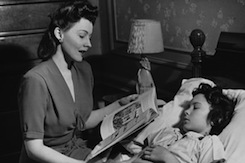
Storytelling used to be the only way families could pass on knowledge from generation to generation.  There were no books or computers to keep track of information.  Those born in 2012 are looking at the possible extinction of the paper book in their lifetime.  E-readers are so compact and can hold so much information that they are much easier and more convenient to hold and take along.  Will this change bring back the art of the bedtime story, or further help to get rid of it?
It’s not that children aren’t getting bedtime stories. They are, but they are stories read from a book.  With millions of books available it’s often easier to grab one of those than to come up with you own story.  According to Rick Polito, creator of Shake-N-tell, by reading books to our kids we are showing them how to be consumers and not creators.  Though reading books is very important in helping children learn to read, hearing original stories helps them learn to imagine.
Kids enjoy stories that are about things that have happened in their family.  You could call these stories non-fiction.  Tell your children about adventures you had when you were young.  Let them know how you spent your days.  In the days before computers and massively complicated video games kids actually played outside and made mud pies.  Use your stories as a jumping off point.  If you were once chased by a bumble bee, put yourself in the character of the bumble bee and tell the story from that perspective.
It seems that it’s easier and quicker to just grab a book at bedtime.  Parents are tired and want to sit down, put their feet up and relax a little before going to bed.  Keep in mind that your kids are only young once and if you make up stories for them at bedtime it is likely that they will do the same for their children.
Telling and sharing stories puts a personal spin on them.  There’s something about hearing stories that connects the teller and the listener.  Watch how differently your child looks at you when you read them a story versus when you tell them a story.  There are no pictures to look at because you are creating pictures with your words in their imaginations.  The stories are more interactive because the kids can ask questions about the characters.  When you read a book it’s not really possible to get into the author’s head.  Kids really like being able to find out the “back story” and will be that much more drawn in.  If you can help your kids use their imaginations they will be more prepared for all of the writing they will do in school.  Teachers ask the kids daily, to write a page about … fill in the blank.  If you have laid the ground work with your kids in story telling they will have no trouble writing these stories in school.
Then there are those people that say they can’t come up with their own stories.  They say that they are just not good at it.  You know the saying, “There’s an app for that!”  Well there is and it’s free.  It’s called Shake-N-Tell.  This application helps by providing the bones of a story and lets you use your imagination to embellish the details of the story.  The kids can help tell the story too.  Even if you don’t use it as a bedtime tool it would be a fun way to make a long car ride go by faster.
The creator of this application, Rick Polito, is a newspaper reporter turned stay-at-home dad and it occurred to him after talking with some of his friends that this application might help those people that are tired from a long day and are unable to come up with their own stories.  He wanted to give people the tools to create their own stories and possibly jump start their imaginations and get them to create their own after a while.
Give storytelling a try with your kids tonight and watch their imaginations grow.

 P.S. This post was  proposed to me for publication byCarol Watson. I'm therefore publishing it by her invitation and under her permission. See also the link below fore more information:

Top 10 Parent Concerns About Hiring a Nanny


Today’s unstable economy almost demands that all families be two-working-parent households, which creates an enormous need for quality, capable childcare. New parents on the verge of returning to work,  as well as those that are considering a shift from daycare to in-home childcare, are faced with the often daunting task of finding and hiring a nanny to care for their children in their home. Regardless of how appealing the idea of having a nanny may be, there are still plenty of concerns that the majority of parents have.
  1. Nanny Tax Compliance – CNN reported in 2004 that the compliance rate for families and nannies regarding tax laws was less than 13%, meaning that roughly 87% of families that employ domestic workers do so illegally. The penalties for being discovered are quite steep, with interest rates and back taxes adding up to a significant chunk of change. More nannies are beginning to understand the importance of being paid legally, and are unlikely to accept posts that require them to evade taxes. The laws that govern nanny taxes are very complex, which is a deterrent for many families that would otherwise be compliant; fortunately, there are services and specially-designed software available to help parents pay their childcare providers legally.
  2. Qualifications – Every parent in search of a nanny dreams that they’ll find one with an advanced degree in child development and years of experience, but the truth is that those nannies can be difficult to come by. It’s not uncommon for parents to become disillusioned soon after beginning their nanny search when they discover how many individuals without education or nanny experience apply for nanny positions, leaving them concerned about the level of care a more accessible candidate may provide.
  3. Lack of Regulation – Daycare centers have their drawbacks, but properly licensed ones are almost always regulated by impartial state agencies that ensure the environment is as safe as possible, and that workers are reasonably competent. As yet, the nanny industry has no such set of regulations, making it easy for almost anyone to apply for a post.
  4. Disciplinary Styles – Disciplinary tactics can be a contentious, hot-button issue between couples; worries about the stance of a stranger can be enough to make a parent worry themselves to distraction. Concerns that a nanny might be too harsh, or even physically punish their child, has contributed to the rise in nanny cam usage.
  5. Criminal Background – The advent of the Internet has simplified the process of running a background check on a prospective employee dramatically; before the web made ordering searches possible, parents were often forced to rely on the word of a nanny and her references alone. Still, parents worry about a nanny’s potential criminal history until those reports come in.
  6. Questionable Driving Record – Parents that don’t expect their nanny to transport the children and aren’t planning to require her to run any errands outside the home may choose to save their time and money from being spent on a check for moving violations. Those that do have these expectations, however, may find themselves in a sea of worry regarding their new nanny’s ability to transport their children safely.
  7. Eligibility For Employment – In areas with a large immigrant population, employers must confirm that any nanny candidate is legally allowed to accept work in the United States, which may be a challenge if the bulk of the domestic worker hiring pool is made up of those seeking to work illegally.
  8. Insurance Requirements – In addition to any contributions to health insurance premiums that an employer may choose to make, many states require that nannies be covered under a worker’s compensation and disability policy.
  9. The Children Might Love Her More – Despite the unlikelihood of a child coming to love his nanny more than his parents, it’s a very real concern for some. Terms like “mommy guilt” and “nanny jealousy” are so common that they’ve become part of the childcare provider lexicon, and can be difficult to combat.
  10. Negotiating a Salary Package – Hiring a nanny requires parents to undertake the sometimes harrowing process of negotiating a compensation package that meets the needs and expectations of both parties; additionally, drafting a written nanny contract can also be quite tedious.
Despite the concerns and occasional problems finding and securing a competent and qualified nanny, most families that employ a private childcare provider are loath to consider any other options due to the exceptional level of one-one-one care and personalized attention that their children can receive from in-home care.
 P.S. This post was  proposed to me for publication by  Jessica Jackson.  I'm therefore publishing it by her invitation and under her permission. See also the link below fore more information:


 http://www.nannyagencies.net/blog/top-10-parent-concerns-about-hiring-a-nanny/

10 Clothing Basics to Buy for a Mix and Match Kid’s Wardrobe


Back to school time is the prime time to go through your child’s existing wardrobe and figure out what still fits and what’s no longer an option. It’s also the perfect time to clean out the closets and the drawers and get ready to add some new and fun pieces to her wardrobe.  Before you invest in new clothes, though, take inventory of what your child still has that fits.  Either take pictures of these pieces or make yourself a list prior to going shopping so you don’t double up on the same items.  To maximize her wardrobe, you will want to buy pieces that coordinate with the ones that she already has.
  1. Jeans are a must.  Jeans are a wardrobe staple that match just about everything, so having a few pairs on hand is never a bad thing. Colored jeans are all the rage right now, so make sure to pick up at least one pair of those.  Stick to a few pairs of basic blue jeans as well so that they can be mixed and matched with tops.
  2. Leggings are great for girls. For girls, leggings are a must wear item.  They can be paired with a cute dress or a long shirt, or they can be worn under a shorter skirt.  Choose basic colors like navy, black, and white when buying leggings so that you can mix and match them easily.
  3. A basic white shirt goes with everything.  For both boys and girls, buying a basic white shirt is a closet staple. The white shirt doesn’t have to be a plain t-shirt though, and you can buy girls a pretty blouse and boys a white button-down or polo.  Make sure to use bleach when you wash these because a bright white shirt looks great, but a dingy gray one does not.
  4. Underwear and socks are very important.  As kids grow it’s often overlooked if they need bigger underwear or new socks.  See how your child’s are fitting and assess if she needs some new ones.
  5. A jacket or hoodie will allow kids to layer.  Fall is an especially tricky time to dress for the weather since it frequently changes throughout the day, so putting your kids in layers will help them stay comfortable all day long.  If it’s a little cool in the morning when he walks to school a jacket or hoodie will keep him warm, but you don’t want to dress him in a sweatshirt because by afternoon it will have warmed up and he will be hot.  Sometimes the air conditioning in schools can seem too cold to some so having a way to keep the chill off will make your child more comfortable.
  6. Tennis shoes are a must for gym class.  Kids don’t necessarily need the latest and greatest brand name shoes, but they do need shoes that fit well and allow them to move quickly with ease.  Whatever your budget, it’s important that the shoes fit and support her growing feet.
  7. Boys will need a pair of nicer slacks.  Sometimes schools will take the kids on a field trip to see a play or musical and ask that they dress up for the event.  Having a pair of dress slacks that can be paired with the basic white shirt that you’ve already bought will give them an easy option when they need to look a little nicer.
  8. Girls may need a dress.  This dress does not have to be overly frilly and full of ruffles, but it shouldn’t be too casual either.  Find something comfortable that would be age appropriate for your girl.
  9. Dress shoes are needed.  To go with the boys’ dress pants and with the girls’ dress a pair of dress shoes is needed.  Unlike the tennis shoes that will most likely be worn almost every day, the dress shoes can be inexpensive if they aren’t going to be worn frequently.  Buy something very basic, like a black or brown shoe that can be worn with most colors.
  10. A winter coat is a must in most climates.  Some areas of the country will use this more often than others, but most areas will need a winter coat at some point during the year.  How heavy the coat is will be determined by where you live.  If you have almost six months of winter, like in the Midwest and Northern states, you will want to get a coat that is heavy or has several separate layers. Warmer climates may only need a light parka.
Buying clothes in basic colors can extend her wardrobe and increase her ability to mix and match her clothes.  Adding a hoodie to an outfit will change the entire look of an outfit.  Having shirts that can be worn with jeans, leggings, or a skirt will give her the versatility to make different looks throughout the year.  While these are just the basics, you should also plan to pick up a few special items for picture day or other times when she wants to look especially nice.

 P.S. This post was  proposed to me for publication by Tina Marconi.  I'm therefore publishing it by her invitation and under her permission. See also the link below fore more information:


http://www.babysitters.net/blog/10-clothing-basics-to-buy-for-a-mix-and-match-kid%E2%80%99s-wardrobe/

mercoledì 29 agosto 2012

Biggest Myths About Nanny Care


A lot of people are confused about what exactly nanny care is. Most people form their opinions about nannies and what their job entails through TV, movies, and fiction, and those notions are often pretty far removed from the truth. Here’s a look at some of the myths and realities of in-home childcare.
Being a nanny isn’t a real job. Working as a nanny is like working in any other job. The nanny is legally required to pay taxes, she receives a W-2 at the end of the year, she’s entitled to workers compensation if she’s hurt on the job and she can receive unemployment benefits if she’s fired from the job. It’s standard in the nanny industry for full-time nannies to get two weeks of paid vacation each year, paid federal holidays, and yearly bonuses. Plus nanny jobs are often the highest paid childcare providers in the United States when compared with daycare workers and preschool teachers.
Being a nanny is something pretty much anyone can do. Technically this is true since there are no legal requirements for working as a nanny; however providing quality in-home childcare requires experience, training, a specialized skill set, and specific personality traits.
Nannies don’t just babysit the children they care for, and they do far more than just provide custodial care; they keep a child safe and entertained. They care for the whole child, meaning every day they focus on providing for a child’s physical, emotional, social, and educational development. They also provide household support by handling many of the tasks related to children such as meal preparation, laundry, and organization.
When you look at what it takes to provide consistent, quality childcare and effective support to the parents, it’s easy to see that it takes a special person to be a successful nanny.
A nanny must wear a uniform, live with their employers, be available 24/7, cook, clean, sew, and do whatever else their family needs. Movies, television shows, and books have given us a lot of different models of what a nanny is and what she does. Unfortunately, most of them don’t reflect the real job of a modern nanny. Most nannies don’t wear a uniform to work. Those that do can usually be seen in khakis and a polo shirt rather than a matronly dress. The majority of nannies don’t live with their employers. They have their own homes and their own lives. While some executive positions require a nanny to be available whenever the family needs help, most nannies work a regular schedule of 8 to 12 hours a day, 5 days a week. And the standard job description of a nanny only includes child-related tasks, like cooking healthy meals for the children, doing the kids’ laundry, and keeping the play room clean. Some nannies take on additional duties, but they’re paid extra for it.
Nanny employers are rich, shallow, uninvolved parents who don’t want to deal with their own children. While a few parents may fit that description, the overwhelming majority of parents that choose nanny care do so because they want the very best care for their children. While they have the financial advantage of being able to afford a nanny, they still face the same challenges other parents face; parenting is hard even if you have a devoted caregiver at home. Nanny employers are actively involved in their children’s lives, they worry about being a good enough parent, and they struggle to fill all their life roles: parent, child, spouse, employee, friend, neighbor, and community member.
Nannies have to pass a criminal background check to work with children. There are no legal requirements for a nanny to pass any type of background check, criminal or otherwise, before working as a nanny. The majority of nanny placement agencies perform a comprehensive background check before placing a nanny and many parents run a check before hiring a nanny on their own. Unfortunately, there isn’t an industry standard for background checks so it’s up to parents to wade through the information available and figure out what checks are necessary.
The state of California has implemented TrustLine, a state-wide verification system that requires childcare providers to be cleared through a fingerprint check of records at the California Department of Justice. Nanny placement agencies that place nannies in CA are required to register their placed nannies with TrustLine. However nannies who find work outside of an agency (e.g. Care.com, online classifieds, word of mouth) are not required to be registered with TrustLine.
Nannies have basic safety and child development training. Actually, there are no training requirements for working as a nanny. While they of course should be, nannies don’t even have to have CPR / first aid certifications to secure a position. That’s why parents must talk about training during the interview process. Find out what type of training your potential nanny currently has and what she’s committed to doing once on the job. Training is the key to being a quality caregiver.
Nannies and nanny employers don’t always resemble the people depicted in TV shows, movies, and books. However the realities of the nanny profession are just as interesting.

 P.S. This post was  proposed to me for publication by Kathleen Crislip.  I'm therefore publishing it by her invitation and under her permission. See also the link below fore more information:

http://www.nannycare.org/blog/biggest-myths-about-nanny-care/

giovedì 23 agosto 2012

How to Teach Your Child to Tie Their Shoes Without Bunny Ears


Tying your shoes is something that most people do almost every day, often without even thinking about it, but with the invention of Velcro shoes some parents are putting off teaching their children how to tie their shoes.  However tying shoes is a necessary lesson that can be taught when a child is young.  If your child can handle a pair of scissors and successfully cut paper then she has the dexterity to tie her own shoes.  Kids should have the ability to tie their shoes between the ages of 3 and 6.
The easiest way to start teaching your child to tie her shoes is to get a couple of adult shoes out to practice on, one for you and one for her.  On her shoe it might make the teaching process easier if you re-lace her shoe with a white lace in which you have taken a marker and colored half of the lace.  That way you can refer to the white lace and to the colored lace instead of trying to explain right and left to her.
If your child’s dominant hand is the same as yours, sit side by side with her to teach her.  If your child has the opposite dominant hand, then sit across from her.  This will ensure that you are not teaching her backwards.
Step 1: Cross the laces and tuck one lace underneath the other lace and pull both laces tight to the shoe.
Step 2: Make a loop out of one of the laces.  While holding that loop tightly in one hand, use the other hand to wrap the straight lace around the loop.  Show her how to tuck the straight lace through the hole beneath the loop that she is holding.  Let go of the loop.
Step 3: Take a loop in each hand and pull tight.  Adjust the loops until they are about the same.
Step 4: Take a loop in each hand and cross them, just like she did at the beginning with the laces.  She will tuck one loop under the other and pull tight.  Now she has double tied her shoes and they shouldn’t come untied.
Step 5: Practice, practice, practice!
Allow your child to practice with you and patiently help her perfect her skills.  This lesson could take as little as 45 minutes or it could take several days, depending on how quickly your child picks up on the technique.  Make the process fun and your child will want to keep practicing.  If you get upset with her then she won’t want to continue practicing because it will no longer be fun.
Once she has mastered tying the big shoe let her practice on her own little shoe.  This will be harder because the laces will be much shorter.  After she has gotten good at tying her shoe with it off her foot, show her how to loosen the laces and put her shoe on and then tighten up the laces and tie her shoe.  She can sit and practice this skill on her own at this point.  Make sure that you lavish her with praise every step of the way.  Soon you will be able to have her put her own shoes on and tie them herself.  This is a huge accomplishment for her and one she should be proud of.
 P.S. This post was  proposed to me for publication by Meghan Welker.  I'm therefore publishing it by her invitation and under her permission. See also the link below fore more information:


venerdì 10 agosto 2012

9 Preventable Childhood Injuries

Whenever I hear that a child has fallen out of a window or drowned in a hot tub, I can’t help but feel a mix of emotions: sorrow for the family who lost their child in such a tragic way and anger because a child’s death could have been prevented.

According to WakeMed Health & Hospitals, preventable injuries are the number one killer of children ages 14 and under in the United States. The North Carolina based healthcare system asserts that “90% of these injuries could be prevented if families took the simple steps necessary to protect their children.”
The Center for Disease Control reports that over 12,000 children died during the period of 2000-2006 as a result of an unintentional injury.  Parents and nannies must work together to create a safe environment for children to explore and interact with their world. While all safety risks can’t be eliminated, they can certainly be minimized to reduce the likelihood of a child becoming victim to a preventable injury.
Whether you are a parent or a nanny, it’s vital that you are familiar with preventable injuries and take steps to protect the children in your care.
Preventable injuries include:
Crib Suffocation – Infants can become suffocated by crib bumpers, soft bedding, loose blankets, and cuddly toys.  Removing bumpers, using a sleep sack, and putting the baby to bed with nothing else in the crib can help prevent suffocation.
Window Falls – Children can climb onto windowsills and fall out of open windows. Keeping windows closed and locked when not being used for ventilation, installing window guards with a quick release system, removing furniture to discourage climbing to look out of the window, and supervising children when in rooms and areas with windows can help to prevent window falls.
Drowning Deaths – From a few inches of water in a bathtub, to kiddie pools, to in ground swimming pools and large bodies of water, always practice touch supervision when children are in and around water. Never assume someone else is watching your child. Always stay within an arm’s reach to prevent drowning.
Heatstroke – Especially in young athletes, the risk of heatstroke is a real concern. Keeping children hydrated, having planned water breaks, reducing activity when the heat index is high, and cooling overheated children down quickly can help prevent heatstroke in children.
Hyperthermia – As of August 2012, 15 children have already died from hyperthermia as a result of being left in a vehicle, according to the San Francisco University the Department of Geo Sciences website. Preventing deaths from vehicle related hyperthermia is easy: never leave a child in a motor vehicle unattended. Parents and nannies should commit to always checking the backseat before leaving the vehicle.
Burns – “Keep your pot handles turned in” is more than just a catchy public service announcement tune; it’s a way to prevent accidental burns. Keeping hot liquids out of the reach of children, setting your water thermostat to 120 degrees Fahrenheit, and keeping kids away from cooking surfaces and grills can help prevent accidental burns.
Crashes – It’s estimated that 80%-90% or more of car seats are installed wrong or are used incorrectly. A correctly installed and used car seat can help prevent injury or death to children who are in a motor vehicle accident. Always have a certified passenger safety technician check your seat installation to be sure it is being installed and used correctly.
Poisoning – Access to harmful medications and chemicals can be prevented. You should always store medications and chemicals out of sight and out of the reach of children. Store medications in locked boxes and store cleaning supplies in locked cabinets. Many women carry around medication with them. Be sure to keep the pocketbooks of visitors out of reach to children to prevent accidental access.
Lawn Mower Accidents – Many dads consider having junior help mow the lawn a real bonding experience. According to the Children’s Trust of South Carolina, there are 68,000 injuries related to lawn mowers each year. From driving the ride-on mower to helping push the foot propelled mower, each year children die and suffer serious injuries that result in amputation as a result of helping to mow the lawn.
Parents and nannies should work together and be proactive in preventing unintentional injuries. Take regular assessment of the places the child spends the most time and ensure that the appropriate measures have been taken to create an age-appropriate area that promotes free exploration while minimizing the risk of preventable injuries.
Don’t let a child you love become a statistic. While not every serious injury can be prevented, many of them can.
 P.S. This post was  proposed to me for publication by Nancy Parker I'm therefore publishing it by her invitation and under her permission. See also the link below fore more information:

 http://www.enannysource.com/blog/index.php/2012/08/07/9-preventable-childhood-injuries/

lunedì 6 agosto 2012

Nothing ir really better than this (for a newborn child)

Since long time past manhood have found in the breast milk their first nutrition.

According to the  majority of pediatricians breast milk contains antiviruses and antibatterical qualities, unable to be replaced in any other milk or food from industrial productions.

That's why is so important, for working new moms, to know how to handle breast milk for storage.

Also poetically, the sight of a mother feeding her own child at her breast is one of the most emotional and enchanting visions.

If you want to find a clear and complete explanation on this great subject, please go to the link below and read Kaitlyn Johnson's report.


http://www.newborncare.com/blog/how-to-properly-handle-and-store-breast-milk/

giovedì 2 agosto 2012

Tips for Keeping Kids’ Teeth Healthy


How you take care of your child’s teeth now will determine what kind of smile they have when they are an adult.  When a child is born they already have their 20 baby teeth present under their gums.  Some babies are even born with teeth exposed or their teeth come in very early.  Every child is different.  The average age for a baby to start getting their teeth is 6 months.  By the age of 3 most children have all 20 of their baby teeth.
Babies can get cavities.  The ADA (American Dental Association) recommends that you start cleaning your baby’s gums when they are just a few days old.  Dampen a square gauze pad or a soft wash cloth and rub gently across your baby’s gums.  When teeth start to appear use a child’s size toothbrush and water to brush your baby’s teeth.  As soon as your child turns 2, start brushing with a pea sized amount of toothpaste and have your child spit it out when done.  You’ll want to ask your dentist or pediatrician if you should use fluorinated or non fluorinated toothpaste. This will depend on if your child is able to spit, if your tap water is fluorinated and if you give your child fluoride supplements. Parents should continue brushing their child’s teeth twice a day until she can take over the brushing on her own, which is usually around age 6 or 7. As soon as she has two teeth that touch you will need to help her floss her teeth daily.
ADA recommends that you take your child to the dentist around their first birthday.  After their initial visit you can ask your dentist how often you should bring her back.  This visit is to allow your child to start getting familiar with going to the dentist.  Your dentist will inspect her mouth and make sure everything is healthy and to check for cavities.  The dentist will clean her teeth and make any suggestions to you regarding caring for her teeth and gums.
Cavities can be caused by bacteria transferred by saliva from the mother’s mouth.  For this reason it is not recommended that you clean your baby’s pacifier by putting it into your mouth or that you eat off of your baby’s spoon during feeding time.
Baby teeth are important because they hold spaces for the permanent teeth.  If a baby tooth is lost too early the permanent teeth can drift into the open space and then come in crooked.  Your dentist will use a spacer to hold open the spot where the baby tooth was lost if it is lost too early.
The proper technique for brushing is to hold the toothbrush at a 45 degree angle to the gums and brush back and forth covering each tooth.  Brush all surfaces of the teeth.  Your child should brush her teeth for 2 minutes.  Flossing should be done once a day.  Make sure to brush her tongue to remove bacteria and to get rid of bad breath.  Tooth brushes should be replaced as soon as the bristles start to fray or every 3 months.  It’s also a good idea to replace your child’s tooth brush if she has been ill.  Rinsing with a fluoride rinse at the end of brushing is also a way to prevent cavities, should your child’s dentist recommend doing so.
As soon as your child has molars the dentist may put a sealant on them.  The sealant fills up the crevices on the surface of the teeth that are more likely to get a cavity.  It does not hurt to get sealant put on your teeth and it is often covered by dental insurance.  Your dentist will also give your child a fluoride treatment during their exam, but this treatment is optional.
Your child’s diet can affect the health of her teeth. Even watered down fruit juice is bad for your child’s teeth. Water should be offered instead of sugary beverages.  Sticky foods like fruit snacks or raisins can also have negative effects on your child’s teeth. Once your child has brushed her teeth in the morning, when she drinks or eats afterwards have her rinse her mouth with water a few times. She should avoid eating after she’s brushed her teeth for the night.
To keep your child’s teeth and body healthy it’s important that they are eating a healthy diet.  According to MyPlate, which is the new food pyramid, fruits and vegetables should make up half of your child’s diet.  At least half of the grains that she consumes need to be whole grain.  Proteins should be lean when possible, eggs, beans, chicken breast, lean beef and fish.  Dairy is very important to build strong teeth and bones, but make sure you are choosing low-fat dairy options.
For babies, avoid putting anything other than milk, breast milk, or formula into a bottle.  Never put a child to bed with a bottle.  This can cause bottle rot or baby bottle tooth decay, which is very damaging to young teeth.  This condition usually only affects the front teeth, but has been known to affect other teeth.  Encourage your child to drink out of a regular cup by their first birthday.  Extended use of sippy cups is also not recommended.

 P.S. This post was  proposed to me for publication by Jacqui Barrie. I'm therefore publishing it by her invitation and under her permission. See also the link below fore more information:

 http://www.aupairjobs.com/articles/tips-for-keeping-kids-teeth-healthy/

sabato 28 luglio 2012

5 High Protein Snack Ideas for Kids

 According to the Mayo Clinic in Rochester, Minnesota, the protein needs in children change and increase as they get older.  For instance, a child 2 to 3 years old requires 13 to 50g of protein per day and a child 4 to 8 years of age requires 30 to 90g per day.  Once kids get to be 9 to 13 years of age, boys need more protein than girls, with boys needing 40 to 120g and girls needing 35 to 105g.  Protein makes up about 45% of the human body and is essential for good health, so it’s important to make sure that kids fulfill their recommended daily intake.  To help your child reach their daily requirement of protein here are some tasty high protein snacks.
  1. Hummus with pita chips is a high protein snack.  You can buy premade hummus or you can make your own at home.  To make your own, combine 1 can of chick peas, ¼ cup of olive oil, 1 T. of lemon juice, and 1 t. of cumin in a food processor.  Blend all of the ingredients together until they have a smooth and creamy texture.  To make your own pita chips, take 4 pitas and split them open so you have a single layer of bread. Cut each piece into wedges (6 to 8 per pita).  Brush the insides with olive oil and sprinkle with a little salt and pepper and dried oregano if you like.  Spread the chips into a single layer on two baking sheets and bake at 400 degrees for 10 to 12 minutes or until crisp and lightly browned.
  2. Banana with chocolate hazelnut spread makes a tasty, protein-rich snack.  Cut a banana in half and dip one end into the hazelnut spread to coat it, and then dip it into some chopped nuts to cover the spread. When you add the 2 T of chocolate hazelnut spread and 1 oz. of chopped peanuts to the banana, the snack clocks in with a whopping 10g of protein. This snack is very versatile and you can change it up according to your child’s tastes.  If your child doesn’t care for nuts, or has a nut allergy, coconut makes a good substitute. If you want to have a sweet treat you can dip the banana in mini chocolate chips.
  3. Smoothies make a quick protein laden snack, and are perfect for breakfasts on the go.  Blend your choice of frozen and fresh fruit, Greek yogurt, protein powder (optional), and some juice or milk in the blender.  If you use all fresh fruit add about a cup of ice to the blender. Be sure to use Greek yogurt in place of regular yogurt because it has twice the protein.  If you make the smoothie with a cup of Greek yogurt, fruit, juice, and a full scoop of protein powder it will contain 45g of protein.  (Protein powder is best consumed first thing in the morning or after exercise.)
  4. Protein filled yogurt parfaits feel like you’re eating a decadent dessert.  In a clear bowl layer sliced strawberries, vanilla Greek yogurt, and some sliced almonds or granola.  Repeat for additional layers.  Feel free to change up the fruit to take advantage of what is available seasonally or to what your child prefers.  Bananas are available year round and add a healthy dose of potassium to the parfait.  If you use 1 cup of Greek yogurt and ¼ cup of almonds your parfait will have 30g of protein. 
  5. Sliced apples, peanut butter, and a cup of milk pack a high protein punch.  Pairing peanut butter with an apple will create a satisfying snack, and having a glass of milk to wash it all down makes it the perfect nutritional powerhouse for kids. With an apple, 2 T of peanut butter, and 1 cup of milk your snack would have 16g of protein.


P.S. This post was created and proposed to me for publication by Sophie Leake. I'm therefore publishing it by her invitation and under her permission. See also the link below fore more:

 http://www.aupaircare.net/blog/5-high-protein-snack-ideas-for-kids/