last moon

Visualizzazione post con etichetta spanish. Mostra tutti i post

giovedì 6 settembre 2012

5 Spanish Songs Kids Should Know


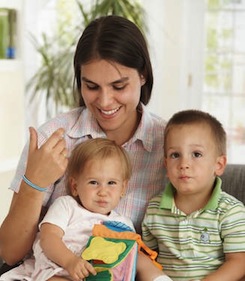
There are a wide variety of methods for teaching children to speak a second language, but classic children’s songs in the chosen tongue tend to feature prominently in the curriculum of most. Whether you’re fortunate enough to have a nanny or childcare provider that’s fluent in Spanish and can teach your children these songs, or you’re learning them yourself in order to pass them along, here are five of the classic Spanish-language children’s songs that your kids should know.
1. Los Colores (Colors in Spanish)
Verde, verde son los arbolitos,
verde, verde sus hojitas son.
Por eso yo quiero todo lo que es verde, verde, verde, verde es mi color.
Amarillo es el color del trigo,
amarillo mis patitos son.
Por eso yo quiero todo lo amarillo, como el tibio rayito de sol.
Rosa, rosa son todas mis cosas,
rosa, rosa mis vestidos son.
Por eso yo quiero todo lo que es rosa, como rama de durazno en flor.
Rojo, rojo es mi sombrerito,
rojo, rojo el botón en flor.
Por eso yo quiero todo lo que es rojo, rojo, rojo, es mi corazón.
El celeste es el color del cielo,
celestitos tus ojitos son,
Por eso yo quiero todo lo celeste, por que es el color de la ilusión.
Blanca, blanca es la nube viajera,
blancos, blancos mis dientitos son.
Por eso yo quiero todo lo que es blanco, como suave copo de algodón.
2. Los Pollitos Dicen (The Little Chicks Say)
Los pollitos dicen pío, pío, pío
cuando tienen hambre, cuando tienen frío.
La gallina busca el maíz y el trigo
Les da la comida y les presta abrigo.
Bajo sus dos alas, acurrucaditos,
hasta el otro dia
duérmen los pollitos.
3. Columbian Happy Birthday Song
cumpleaños feliz
te deseamos a ti
que los cumplas feliz (felices)
cumpleaños feliz.
Que los cumpla feliz,
que los vuelva a cumplir,
que los siga cumpliendo,
Hasta el año 3000.
4. Dos Elefantes (Spanish Counting Song)
Un elefante se balanceaba
sobre la tela de una araña,
como veía que resistía
fue a llamar a otro elefante.
Dos elefantes se balanceaban,
sobre la tela de una araña,
como veían que resistía
fueron a llamar a otro elefante.
Tres elefantes…
Cuatro elefantes…
5. Pin Pon (Mexican Action Song)
Pin Pon es un muñeco
muy guapo de cartón,
se lava su carita
con agua y con jabón
Se desenreda el pelo
con peine de marfil,
y aunque se da estirones
no llora ni hace así.
Cuando le dan la sopa
no ensucia el delantal
pues come con cuidado
parece un colegial
Apenas las estrellas
comienzan a salir
Pin Pon se va a la cama
y se acuesta a dormir
Pin Pon dame la mano
con un fuerte apretón,
pues quiero ser tu amigo
Pin Pon Pin Pon Pin Pon
PIN-PON
These are just a sampling of the most popular traditional Spanish-language children’s songs; there are a treasure trove of additional songs to be found. Daycare centers and preschools with a strong Spanish program can help your children learn even more of these great ditties, which teach basic counting, color recognition, and celebrate milestones, all while increasing little ones’ grasp of a second language.

P.S. This post was  proposed to me for publication by Paul Taylor. I'm therefore publishing it by her invitation and under her permission. See also the link below fore more information:

 http://www.babysittingjobs.com/blog/5-spanish-songs-kids-should-know/

mercoledì 5 settembre 2012

10 Spanish Words Kids Learn from Watching Dora the Explorer


Pint-sized, animated seven-year-old Dora Marquez has been coming into living rooms since 2000, teaching children her signature blend of morality, adventure, and Spanish vocabulary words via the hit cartoon series Dora the Explorer. As one of the most successful children’s shows on television today, Dora the Explorer has generated an estimated three billion dollars in merchandise around the world and won the hearts of a generation. If your little one is a Dora fan, here are 10 of the Spanish words he’s likely to learn from her.
  1. “¡Hola!” – This friendly greeting, which translates to “hello!” in English, is one of the many words that kids pick up from the gregarious Dora.
  2. “Amigos” – Dora’s friends, or “amigos,” are by her side through all of her many adventures, helping her to achieve her goals and complete her quests. Boots the Monkey is Dora’s best amigo, offering his assistance in solving puzzles and figuring out clues.
  3. “la Familia” – From her cousins Diego the Animal Rescuer, Daisy, and Alicia, to her beloved Mami and Papi, Dora Marquez’s family is a big part of her life. Diego has proven to be such a popular member of Dora’s familia that he became the star of his own show, Go, Diego, Go! in 2005.
  4. “Abuela” – Abuela, Dora’s grandmother, is featured prominently in the show as Dora visits her often. Because Abuela is Mami’s mother, she isn’t Diego, Alicia and Daisy’s grandmother; Abuela is one of the recurring characters popular enough to be the subject of merchandising in the form of toys and books set in the Dora universe. While kids learn the Spanish word for their own grandmothers, they’re also learning a bit about family dynamics and relationships.
  5. “las Estrellas”Spanish for “stars,” Backpack’s Star Pocket stars are referred to as Estrellas on many occasions. Kids also learn the Spanish word “¡delicioso!” from Backpack, who receives items placed inside with the phrase, “Yum yum yum yum yum, ¡delicioso!”
  6. “¡Espera!”The Spanish word for “wait” appears in Dora’s vocabulary quite often, ostensibly because rushing headlong into her many adventures would be reckless. Children that are big fans of Dora are likely to learn “espera” early on, and use it often.
  7. “Azul”The first Spanish word taught to English-speaking audiences by Dora the Explorer was “azul,” which means “blue” in Spanish. This word began Dora’s tradition of helping kids learn basic vocabulary along with the action verbs that are her trademark, seamlessly integrating Spanish words in a way that helps kids who are already learning basic language skills absorb foreign words alongside more familiar ones.
  8. “¡Lo hicimos!”English-speaking parents are often baffled by the phrase uttered in Dora the Explorer theme song; kids know that she’s crooning ¡Lo hicimos!” which means “we did it!” “Swiper, no swiping, Swiper, no swiping (oh, man!) Dora the Explorer, ¡lo hicimos!”
  9. “¡Cuidado!” – Another cautionary word from our tiny, animated adventurer, “¡Cuidado!” loosely translates to “look out!” It’s no surprise that Dora and her amigos need to warn each other, as they traverse the landscape to complete one quest after another.
  10. “¡Vamonos!”“Let’s go,” indeed! Dora spends a lot of her time on the go, and teaches all of her viewers that speak English as a first language how to get people moving, too. In addition to teaching kids the importance of doing the right thing and helping those in need, Dora’s enthusiasm for seeking out physically active adventures emphasizes the importance of getting off the couch and into the world. Dora Marquez definitely doesn’t subscribe to a sedentary way of life!
Dora, along with her best friend Boots, cousin Diego, and the antagonist Swiper have starred in more than 140 episodes of Nick Jr.’s highly-rated series, and have helped millions of children around the world acquire second language skills. Interestingly enough, Dora only helps children in English-speaking countries learn Spanish; in other countries, she’s accepted as an American girl, with the majority of dialogue in the country’s native language and her Spanish-language beats substituted for English.

P. S. This post was  proposed to me for publication by Carol Watson.   I'm therefore publishing it by her invitation and under her permission. See also the link below fore more information:


 http://www.nationalnannies.com/blog/10-spanish-words-kids-learn-from-watching-dora-the-explorer/

giovedì 30 agosto 2012

10 Spanish Phrases Parents Must Learn to Communicate with Their Bilingual Nanny


As an increasing number of workers in the private childcare industry are bilingual, many parents are discovering a need to become passably fluent in Spanish themselves in the interest of simplifying communication. Additionally, learning a bit of Spanish allows parents to reinforce any second language skills that they’ve acquired from time spent with their predominantly-Spanish speaking nanny. If your childcare provider’s Spanish language skills are much stronger than her English ones, here are 10 phrases that can help everyday communication a bit easier.
  1. “Repita, por favor.” – Whether you’re speaking Spanish with your nanny and her speed in her native tongue makes it difficult for you to comprehend what she’s saying, or her accent and pronunciation of a particular English word is hard to make out, there will inevitably come a time when one of you will have to ask the other to “Repeat, please.”
  2. “Yo no entiendo.” – Sometimes one of you will have to say, “I don’t understand,” in acknowledgment of a difficulty in communicating or understanding one another’s intentions. This simple phrase can help to prevent a number of misconceptions or misunderstandings before they start.
  3. “Me olvidé’ – Harried working parents with tight schedules and little downtime can be justifiably absentminded from time to time. Letting your nanny know that something slipped your mind by using the Spanish equivalent of “I forgot,” especially if you’ve forgotten something important, is a great way to get her attention and be sure that she understands your flub completely.
  4. “¿Entiende usted?” – Even if your nanny is strongly bilingual, learning the intricacies and similes of a second language is sometimes tough. Ensuring that she understands her instructions or responsibilities for the day by using her native language to ask the question can help stave off mishaps born from miscommunications.
  5. “¡Escríbalo, Por Favor!” – When pronunciation is garbled or difficult to make out, being able to read what your nanny is trying to say can be very beneficial. If you’re still having trouble deciphering an unfamiliar word after she’s written it down, being able to see the exact spelling can help you look the word up in a Spanish to English dictionary or on an online translating service.
  6. “Regreso En Un Momentito.” – Quick trips to run errands or even popping into the next room for a bit still require some kind of explanation to your kids’ caregiver; if you expect to return momentarily, letting your nanny know that you’ll “be right back” or being able to understand the phrase when she uses it can be helpful.
  7. “Estoy Buscando A Juan” – Kids like to slip away to hide in strange places and to generally strike terror in the hearts of their caregivers and parents. Being able to quickly and confidently share news that you’re looking for a particular child can help you and your nanny speed the process and find the tiny escapee.
  8. “¿Qué haces?” – Every person, regardless of culture or language, has their own way of accomplishing certain tasks. If your nanny’s way is different from your own and you’re curious, or vice versa, being able to ask “what are you doing” without struggle can help you both understand each other.
  9. “¿Qué Quiere Decir ‘___’ En Inglés?” – Learning Spanish is likely to be just as difficult for you as learning English was for your nanny, so you’re sure to have questions from time to time about translations and proper usage. “How do I say ____ in English?” is the quickest way to ask your nanny for help in this area.
  10. “¿Cómo Se llama a Esto En Español?” – Just as you’ll need to know how to translate Spanish words into English, you’ll also need to be able to do the opposite. Asking how to say something in Spanish when you have doubts is an effective way of enlisting the help of your nanny and polishing your second language skills.
Investing in a Spanish to English dictionary, phrase book, or Smartphone app can help you navigate conversational obstacle courses with your bilingual nanny, as the needs and demands of your individual household will likely create the need to refer back to such aides. Keep in mind that speaking more slowly might help your nanny understand you better, but increasing your volume does absolutely nothing productive unless she’s also hard of hearing. Maintain a casual, conversational tone to avoid further misunderstandings or create the impression that you’re angry.

 P.S. This post was  proposed to me for publication by  Sarah Tucker. I'm therefore publishing it by her invitation and under her permission. See also the link below fore more information:

/http://www.4nannies.com/blog/10-spanish-phrases-parents-must-learn-to-communicate-with-their-bilingual-nanny/